.webp)


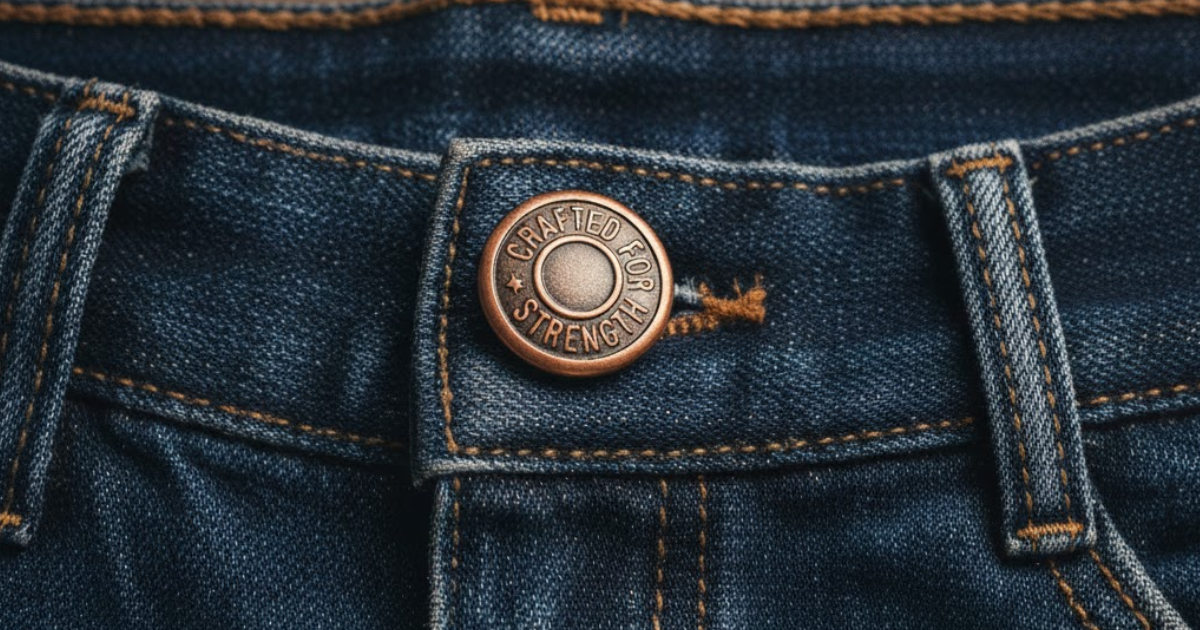
Jeans are designed for durability, and every component of apair of jeans must support that purpose including the buttons. Unlike regulargarment buttons, jeans buttons are engineered to withstand stress, friction,and frequent washing over many years. This is why clothing button manufacturerstreat jeans buttons as a separate category altogether, using differentmaterials, production techniques, and quality standards.
In this article, we’ll explore what makes jeans buttonsunique, how they’re manufactured, and why choosing the right manufacturermatters for long-lasting denim garments.
At first glance, a jeans button may look simple, but itsfunction is far more demanding than buttons used on shirts or dresses. Jeans buttons are load-bearing components.They must hold thick denim layers together while resisting constant pulling andpressure.
Unlike plastic or lightweight buttons, jeans buttons aretypically made from metal alloys such as brass, zinc, or stainless steel. Thesematerials provide strength without compromising flexibility. Reputed clothingbutton manufacturers also apply protective coatings to prevent corrosion,discoloration, and wear over time.
Jeans are worn in environments that expose buttons to heat,moisture, friction, and repeated stress. From sitting and bending to industrialwashing, the button must remain intact.
High-quality jeans buttons are designed to:
This durability is the result of precise engineering andmaterial selection, areas where experienced manufacturers play a crucial role.
The durability of jeans buttons begins with the right rawmaterial. Metal composition is carefully chosen to balance hardness andflexibility. Poor-quality metals may snap or deform, while overly rigidmaterials can damage fabric.
Jeans buttons are usually produced using high-pressuremolding or stamping techniques. This ensures uniform thickness and strengthacross every piece. Professional custom button manufacturers invest heavily in tooling accuracy to maintainconsistency at scale.
Unlike sew-through buttons, jeans buttons are oftenrivet-based or tack-style buttons. This mechanism allows the button to anchorfirmly into thick denim without tearing the fabric.
Finishes are not just aesthetic. Anti-rust, anti-tarnish,and scratch-resistant coatings extend the lifespan of the button. Some finishesare designed to age naturally, creating the worn-in look denim loversappreciate.
Denim brands rely heavily on details to stand out. Thebutton at the waistband is often one of the most visible branding elements.This is why many brands work with custom button manufacturers who can tailordesigns to specific requirements.
Customization options may include:
Custom buttons help reinforce brand identity whilemaintaining the structural integrity required for denim garments.
For jeans buttons, even a small defect can lead to garmentfailure. Reliable clothing button manufacturers follow strict quality testingprocesses, including tensile strength testing, wash resistance checks, andfinish durability assessments.
Buttons are often tested under simulated real-worldconditions to ensure they won’t loosen, crack, or discolor prematurely. Thisattention to quality ensures consistency across large production runs andreduces after-sales issues for apparel brands.
Sustainability in denim doesn’t stop at fabric. Long-lasting buttons reduce garmentwaste by extending the usable life of jeans. Many manufacturers are nowfocusing on recyclable metals, eco-friendly coatings, and low-waste productionmethods.
Working with responsible custom button manufacturers allowsbrands to align their accessories with broader sustainability goals withoutsacrificing performance.
Selecting a manufacturer for jeans buttons isn’t just aboutpricing. Brands should evaluate experience in denim-specific production,material expertise, customization capabilities, and quality assurancestandards.
Established clothing button manufacturers understand how small design choices impact garmentperformance. Their expertise helps ensure that buttons enhance both thedurability and identity of denim products.
Jeans buttons are built differently because denim demandsmore. From material selection to attachment mechanisms and surface finishes,every aspect is engineered for strength and longevity. By partnering with experiencedclothing button manufacturers, brands can ensure their jeans meet bothfunctional expectations and design standards.


.svg)


.svg)

.jpg)




.jpg)

%20(1).jpg)

.jpg)




.jpg)


.jpg)


.jpg)
.jpg)


.jpg)

.jpg)


