.webp)


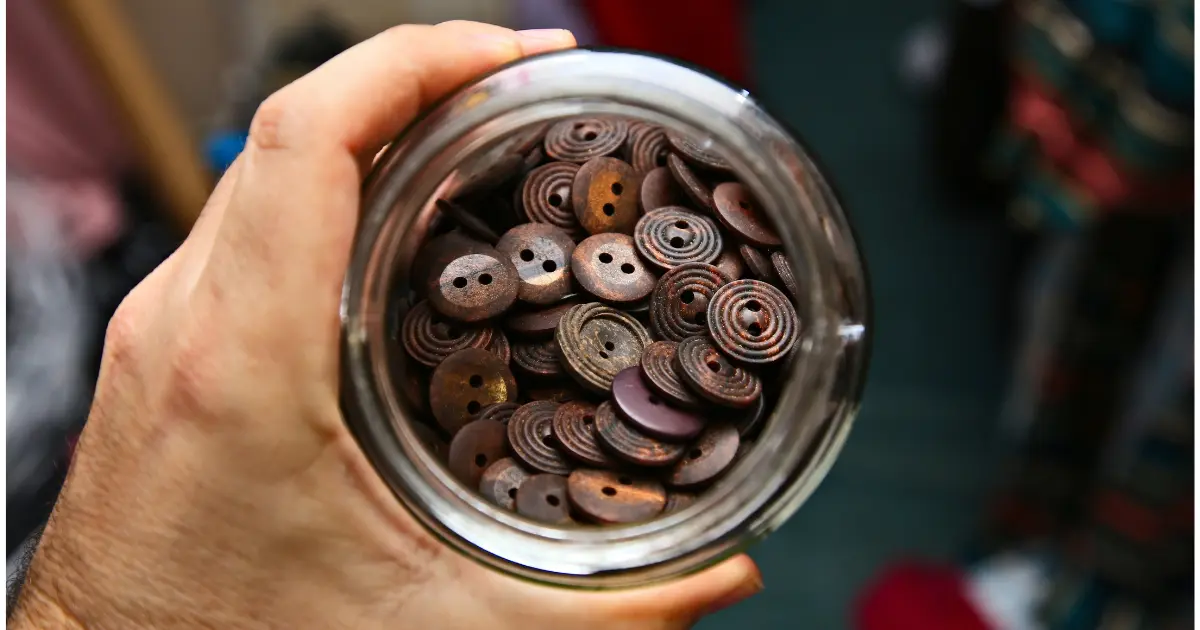
Most button buyers think they are choosing based on color, size, or price. But that is not where the real difference lies.
The casting process is what determines whether a button holds its shape, maintains consistency, or fails during production. Get it right, and you get reliable, scalable output. Get it wrong, and you deal with defects, variation, and unnecessary costs.
The problem is simple. Most suppliers never explain how their buttons are made. They show samples and pricing, but skip the one detail that actually defines quality.
Sheet casting and rod casting are not interchangeable. They produce completely different structures, patterns, and performance outcomes.
This guide breaks both down from a manufacturing perspective so you understand exactly what you are buying and which method fits your production needs.
Button casting is the process of converting liquid unsaturated polyester resin into a solid form that can be cut, shaped, and finished into buttons. The resin is mixed with styrene monomer, pigments, catalysts, and fillers. Once combined, this mixture is poured into either rotating drums or aluminium tubes, depending on the method.
The chemical reaction that follows is exothermic, meaning it generates heat as the liquid resin cross-links into a solid polymer. Timing matters here. Pour too fast, and you trap air bubbles. Get the catalyst ratio wrong, and you'll end up with blanks that crack during turning.
We use two primary casting methods: sheet casting and rod casting. Each produces a different blank shape, different pattern possibilities, and different button types. They aren't interchangeable.
Sheet casting is how the majority of wholesale shirt buttons are made worldwide. It's the faster method, and it's what we use for solid-color buttons, imitation shell, and pearl-effect designs.
The resin mixture goes into a centrifugal casting machine, basically a large rotating drum. As the drum spins, centrifugal force pushes the liquid resin outward against the drum wall, forming a uniform layer. The speed of rotation controls the thickness. Most polyester resin sheets for buttons end up between 2mm and 4mm thick.
Within roughly 30 minutes, the chemical reaction kicks in. The liquid turns into a soft, gel-like state. At this point, the material is stable enough to handle but hasn't fully hardened yet.
Not all sheet buttons come from the same drum. There are two types, and they produce different visual effects.
Pattern drums have textured inner surfaces. When the resin cures against a patterned drum wall, the resulting sheet picks up that texture on one side. This is how we create imitation shell buttons with that layered, iridescent look. The pattern is built into the drum itself, so every sheet from the same drum carries the same base texture.
Plain drums have smooth inner surfaces. These produce flat, consistent sheets used for solid-color buttons, chalk polyester, and any design where the surface pattern will be added later through CNC milling or laser engraving.
Once the gel-state sheet comes out of the drum, it's cut into manageable panels. These panels go onto a punching machine fitted with precision dies in various sizes. The machine stamps out circular blanks, similar to how a cookie cutter works, but with much tighter tolerances.
The punched blanks are soft at this stage. They still need curing, a controlled heating process that completes the polymerization. After curing, the blanks harden fully and are ready for turning, where they'll get their final profile: rim shape, well depth, and hole placement.
Sheet casting buttons have a few built-in advantages. Production speed is the obvious one. You can cast a large sheet, punch hundreds of blanks from it, and move to finishing within a matter of hours.
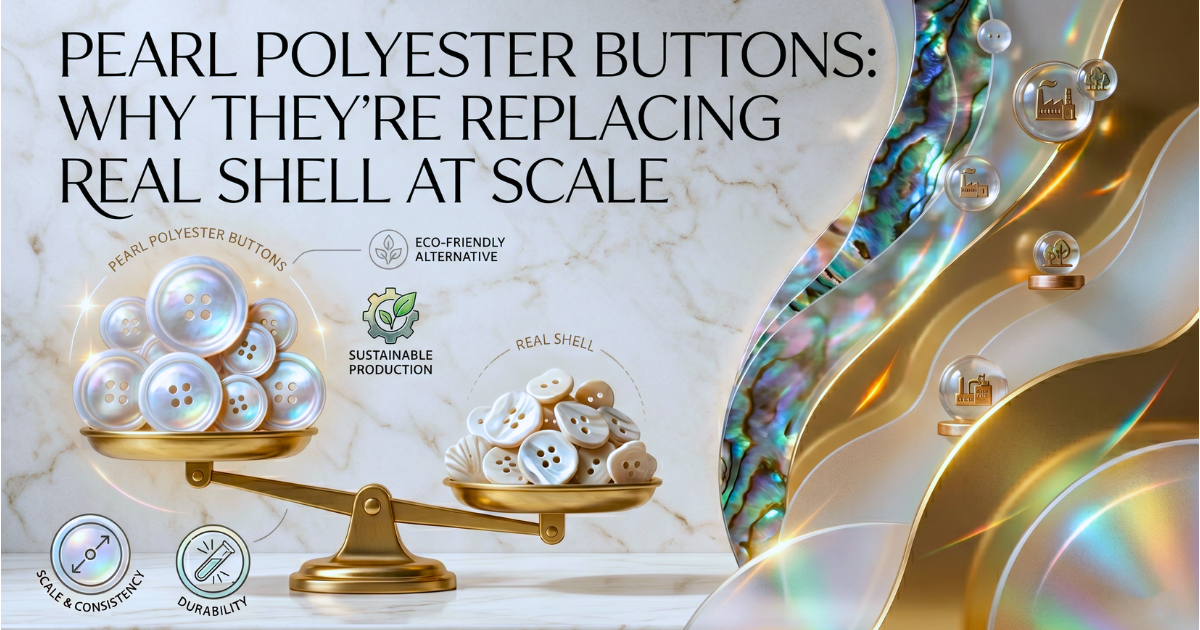
The multi-layer structure is another. When we build pearl polyester buttons, for example, we can layer different pigment mixes into the drum sequentially. The result is a button with visible depth, multiple color layers that you can actually see when you look at the button edge-on. That's a visual effect that rod casting can't easily replicate.
If you're ordering wholesale shirt buttons for a commercial run, sheet casting is almost certainly the method behind them. Shirts, trousers, basic outerwear, and any garment where you need consistent color across thousands of pieces.
Rod casting takes a completely different approach. Instead of flat sheets, the resin cures inside cylindrical aluminium tubes. The result is a solid rod, and buttons are cut from it like slices off a salami.
The mixed resin is poured through a W-shaped pipe into waxed aluminium tubes of various diameters. A special oscillator controls the flow rate, which prevents air entrapment and ensures even distribution inside the tube.
The wax coating on the tube interior serves two purposes. First, it acts as a release agent so the cured rod slides out cleanly. Second, it creates a smooth exterior surface on the finished rod.
As the resin fills the tube, the same exothermic reaction occurs. The liquid transitions through a gel state and eventually hardens into a solid cylinder. Once sufficiently cured, the rod is pulled from the aluminium tube and sliced into individual discs, each one becoming a button blank.
Here's where rod casting gets interesting. The way pigments and fillers mix inside a cylindrical space is fundamentally different from how they distribute in a flat centrifugal drum.
When multiple colors are introduced into the resin mix before casting, they don't blend uniformly inside the tube. Instead, they create flowing, organic patterns that vary along the length of the rod. Every slice (every blank) shows a slightly different cross-section of that same pattern.
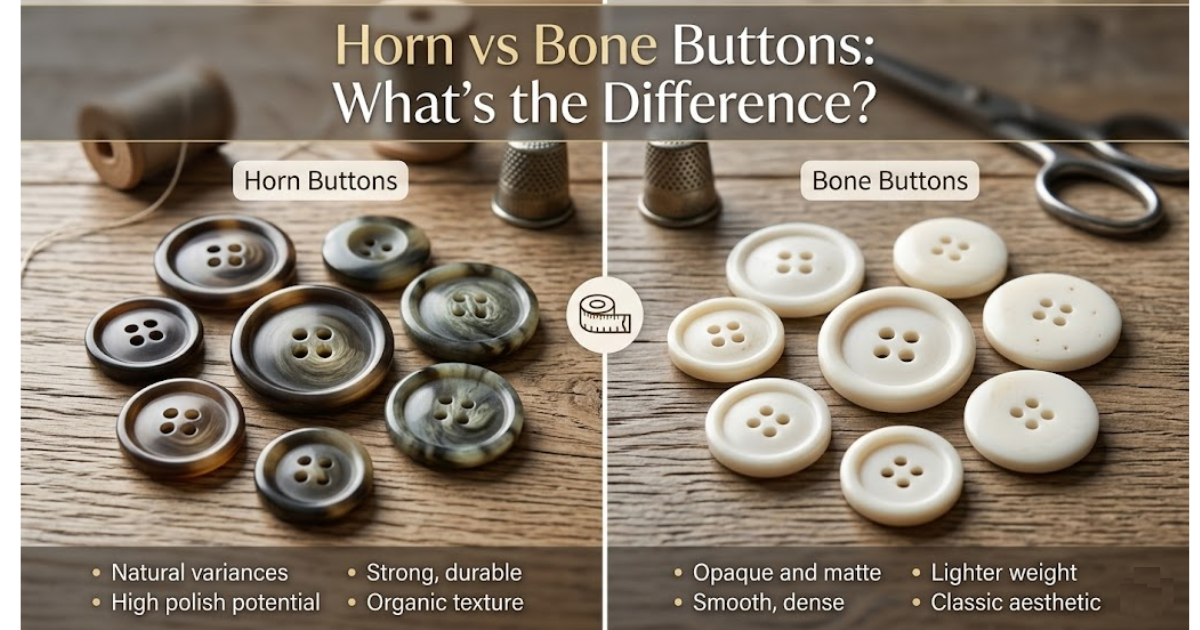
This is exactly how we produce imitation horn buttons, structured design buttons, and those marbled or wood-grain effects that wood button enthusiasts sometimes prefer in a more durable synthetic alternative. No two buttons from the same rod are identical, but they all share the same color family and pattern character. It's controlled variation, and designers love it.
Slicing is done with precision saws that cut the cured rod into discs of a specific thickness. The disc thickness determines the button's final height after turning.
After slicing, the blanks go through the same curing process as sheet blanks. Then they move to automatic turning machines for profiling. Rod casting buttons range from 14 ligne (about 8.9mm) all the way up to 60 ligne (38.1mm), making them suitable for everything from dress shirts to heavy coats.
Casting is just the beginning. Both sheet and rod blanks follow the same finishing pipeline, and each step adds cost, time, and quality.
Turning shapes the blank into its final form. This is where the button gets its rim profile, the well (center depression), and hole drilling. Our factory uses CNC-controlled turning machines that hold tolerances tight enough for automated sewing machines to handle every button without adjustment.
Dyeing adds the final color. While pigments in the resin provide the base color, dyeing allows for precise color matching to Pantone references or fabric swatches. Polyester buttons can handle dye temperatures that would warp natural materials.
Polishing gives the surface its finished texture, ranging from matte to high-gloss depending on the media used.
Optional steps like lacquer coating, laser engraving, and electroplating follow if the design calls for them.
If you're sourcing sustainable buttons, the casting process itself is worth examining. Polyester resin is a synthetic material, but that doesn't mean the manufacturing has to be wasteful.
Sheet casting generates offcuts during the punching stage. Every blank punched from a sheet leaves behind scrap material, the spaces between the circles. At Chetna International, we collect this waste along with rod casting offcuts, curing rejects, and turning shavings.
Through our subsidiary RRAJ Bioplast, we convert non-recyclable button manufacturing waste into compounds using traditional polymers like PP, HDPE, LDPE, and ABS. The waste gets processed into consistent filler material, combined with polymer and additives, and turned into our Reforme product line.
That means the offcuts from your shirt button casting run don't go to landfill. They become raw material for our recycled button range.
If you're placing a wholesale order for buttons, the casting method affects several things you care about.
Lead times
Sheet casting is built for speed. Large batches move quickly from casting to finishing.
Rod casting involves more controlled handling and slower throughput. Expect longer timelines.
Cost structure
Sheet casting benefits from batch efficiency. Lower cost per unit at scale.
Rod casting requires more controlled production. Higher cost per unit, justified only when design demands it.
Consistency vs variation
Sheet casting delivers uniform output across thousands of units. Ideal for standardized garments.
Rod casting introduces controlled variation. Valuable for premium aesthetics, but unsuitable for strict uniformity.
Production risk
Sheet casting is predictable and stable at volume.
Rod casting requires tighter process control. Poor execution leads to inconsistency.
What's the difference between sheet casting and rod casting for buttons?
Sheet casting uses spinning drums to form flat resin sheets, which are punched into blanks. Rod casting fills cylindrical tubes, and blanks are sliced from the cured rods. Sheet casting suits uniform designs; rod casting produces unique, flowing patterns.
Which casting method is used for shirt buttons?
Most wholesale shirt buttons are made through sheet casting. It's faster, produces consistent color across large batches, and works well for the solid-color and pearl-effect styles that dominate the shirt market.
Can cast polyester buttons withstand washing?
Yes. Properly cured polyester resin buttons handle repeated machine washing at temperatures up to 80°C without warping, cracking, or fading. That makes them the standard for commercial garments.
What resin is used in button casting?
Unsaturated polyester resin is the base material. It's mixed with styrene monomer, catalysts (typically MEKP), pigments, and fillers before casting. The exact formula varies by manufacturer and product type.
How does button casting relate to sustainability?
Casting generates waste through sheet punching offcuts and curing rejects. Manufacturers like Chetna International recycle this waste through subsidiary operations, turning scraps into raw material for recycled button lines.
What sizes can be produced through rod casting?
Rod casting produces buttons from 14 ligne (approximately 8.9mm) up to 60 ligne (38.1mm). The tube diameter determines the maximum button size, and larger tubes are available for coat and blazer buttons.
If you're comparing polyester buttons from different suppliers and the prices don't match, the casting method is often why. Rod casting costs more per unit. Sheet casting scales better. And the quality control between casting and finishing is where the real differences between manufacturers show up.


.svg)


.svg)

.jpg)




.jpg)

%20(1).jpg)

.jpg)




.jpg)


.jpg)


.jpg)
.jpg)


.jpg)

.jpg)


