.webp)


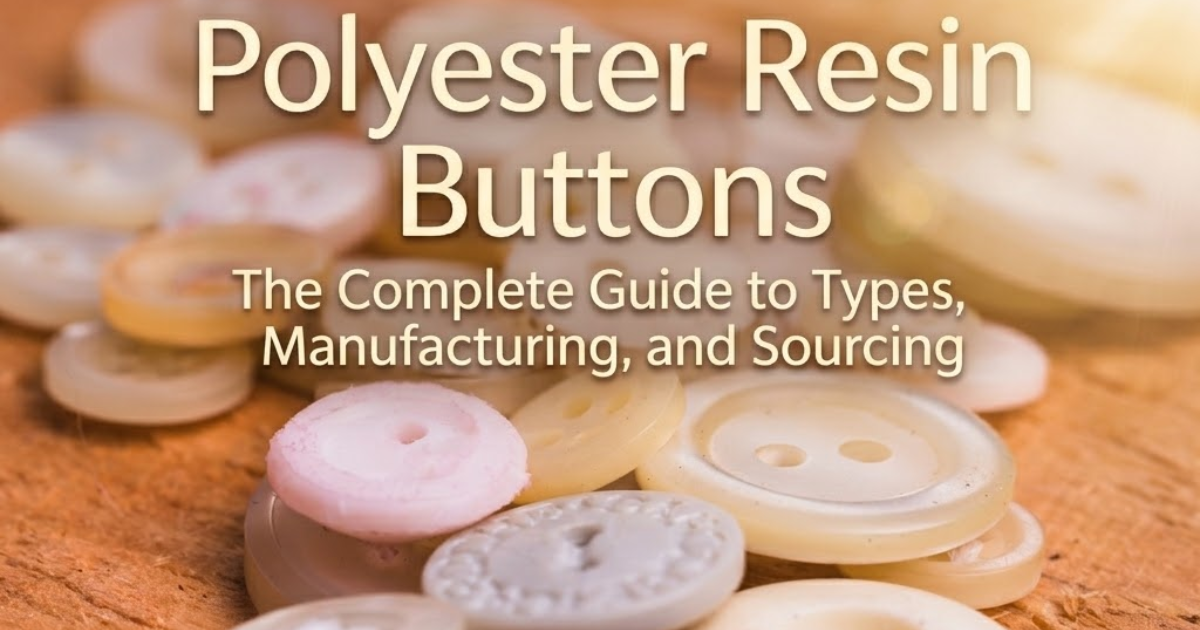
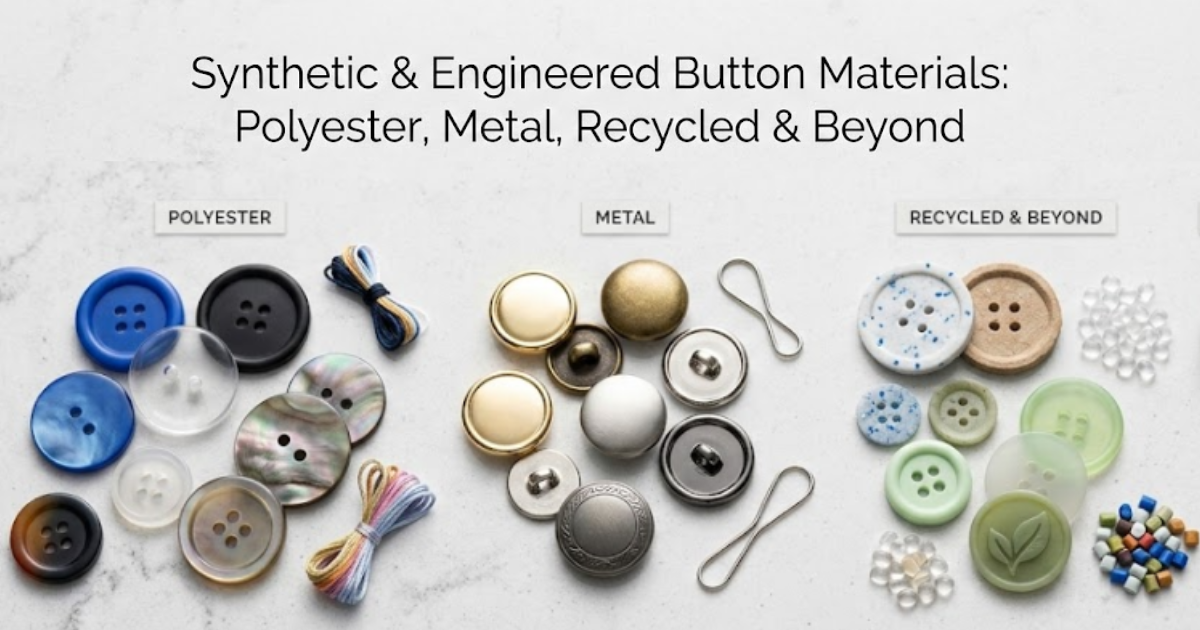
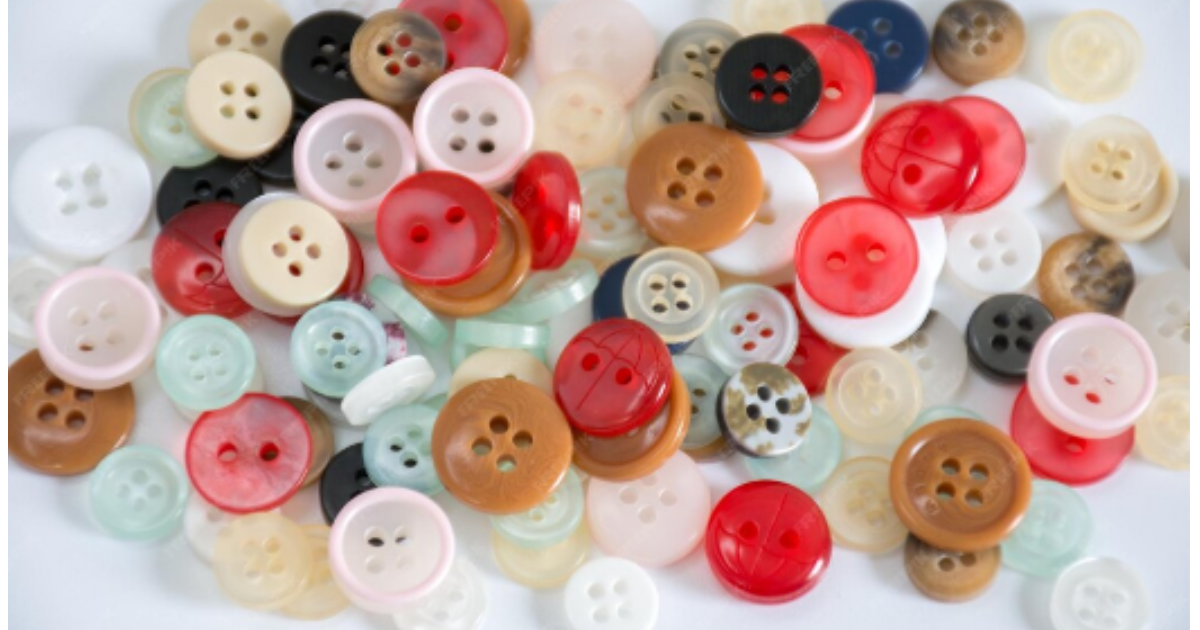
There's a good chance the shirt you're wearing right now is held together by polyester resin buttons. They're the most widely used button type in the garment industry, and for good reason.
At Chetna International, we've run a dedicated polyester factory since 1984 - separate from our natural materials facility. Polyester buttons account for our highest production volume by a wide margin. But not all polyester buttons are the same. The category splits into distinct subtypes, and the gap between a well-made one and a cheap one shows up fast in the wash.
Polyester resin buttons are garment fasteners made from unsaturated polyester resin (UPR) - a thermoset polymer mixed with styrene monomer, pigments, catalysts, and fillers. Once cured, the material is permanently hard and can't be re-melted.
That's what separates polyester from thermoplastics like ABS or nylon. You can't injection-mold a polyester button. It's cast into sheets or rods, then cut and shaped through turning, drilling, and finishing.
The result withstands machine washing up to 80°C without warping, resists household chemicals, and accepts color with precision. For commercial shirting, trousers, and outerwear, nothing matches its cost-to-performance ratio at scale.
Three properties made it the standard.
Color consistency. When you're producing 50,000 garments and every button must match, natural materials like corozo or horn bring beautiful variation - but variation is exactly what mass production can't afford. Polyester delivers identical color across a 100,000-piece run.
Supply predictability. Corozo harvests fluctuate seasonally. Buffalo horn depends on agricultural cycles. Polyester resin is available year-round at stable pricing.
Finishing versatility. One material can mimic shell, horn, stone, wood, or chalk through adjustments in pigment formulas and filler ratios. We've had clients mistake our imitation horn polyester for the real thing under showroom lighting.
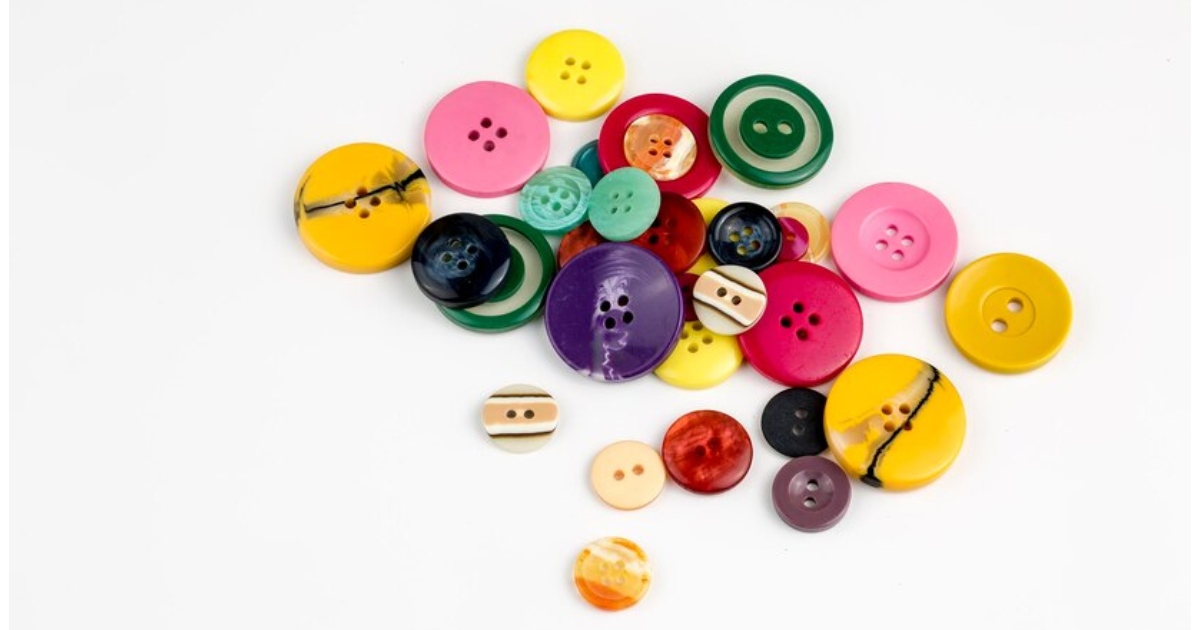
The "polyester button" label covers several distinct subtypes. Picking the wrong one is a mistake we see buyers make regularly.
Solid colors, clean edges, sizes from 10L (6.35mm) to 80L (50.8mm). Produced through sheet casting for uniform thickness. Color goes all the way through - scratches don't reveal a different layer. Handles washing at 80°C. The default for commercial shirting, uniforms, and trousers.
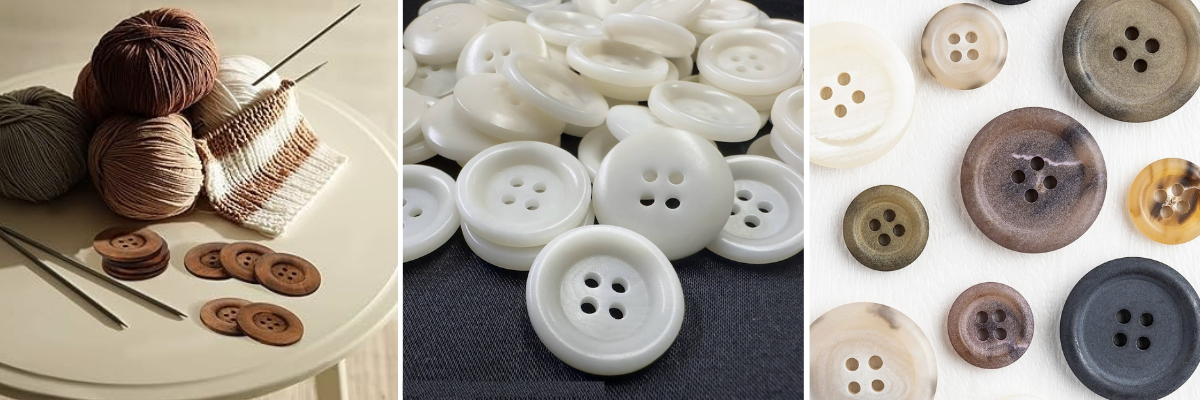
Matte, slightly powdery texture that doesn't look plastic. The effect comes from adjusting calcium carbonate and mineral filler ratios during mixing. If your collection has a natural or artisanal aesthetic, chalk polyester delivers that feel at a commercial price point.
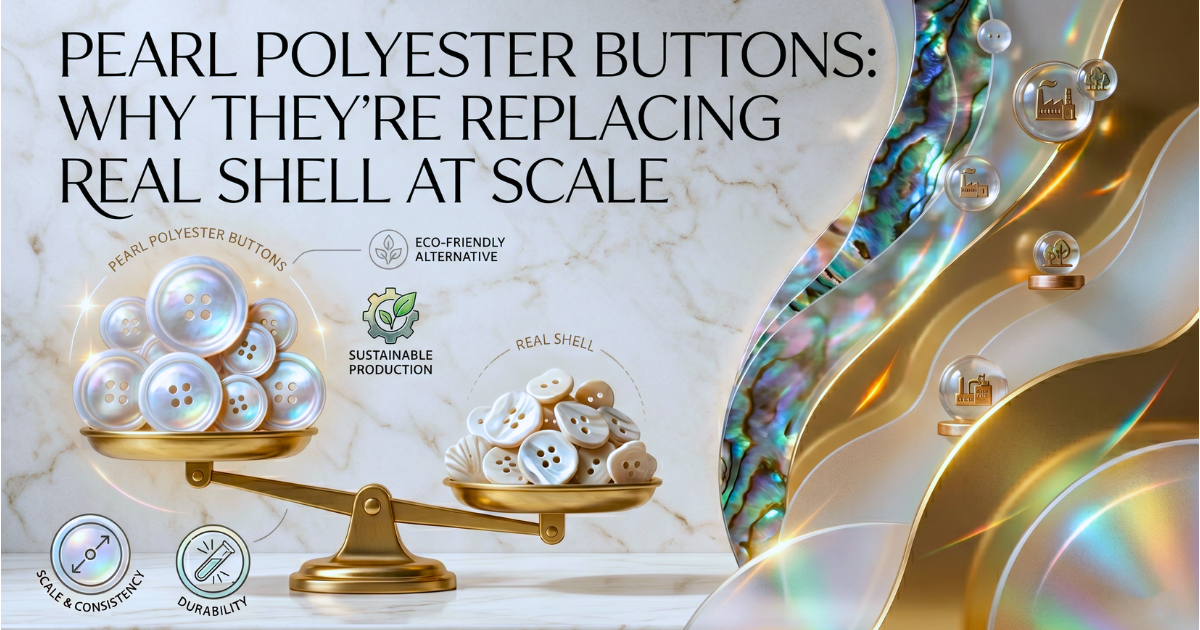
Replicates the iridescent shimmer of real shell buttons through layered pigment systems during casting. Won't chip or crack during garment assembly the way thin natural shell can. Best for women's blouses, formal shirts, and bridal wear.
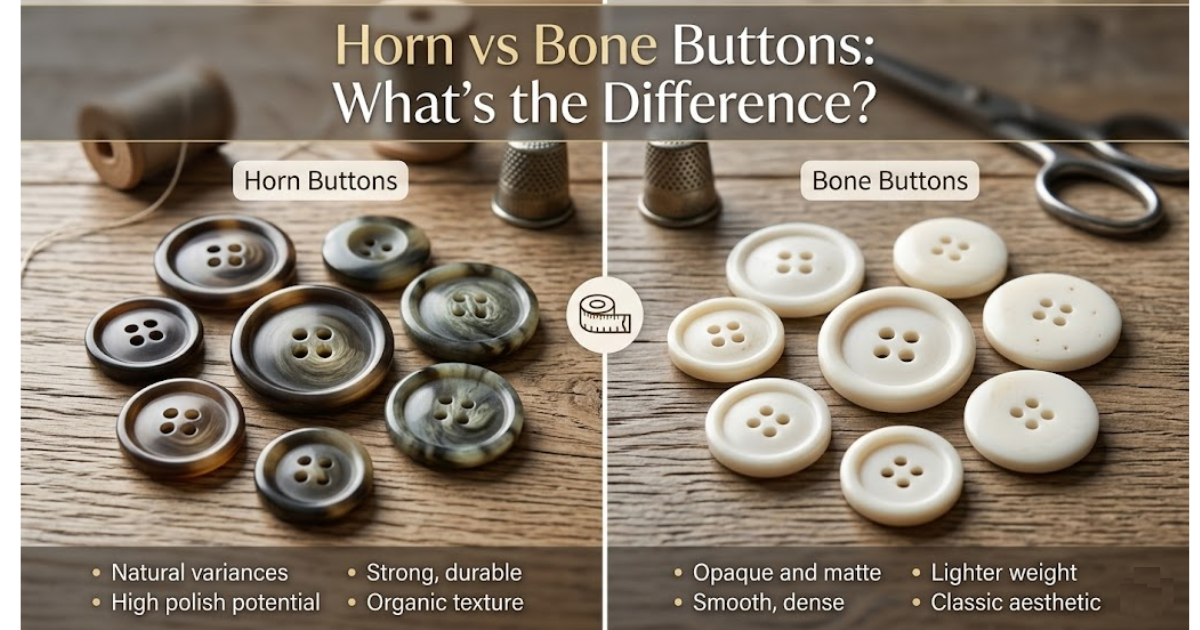
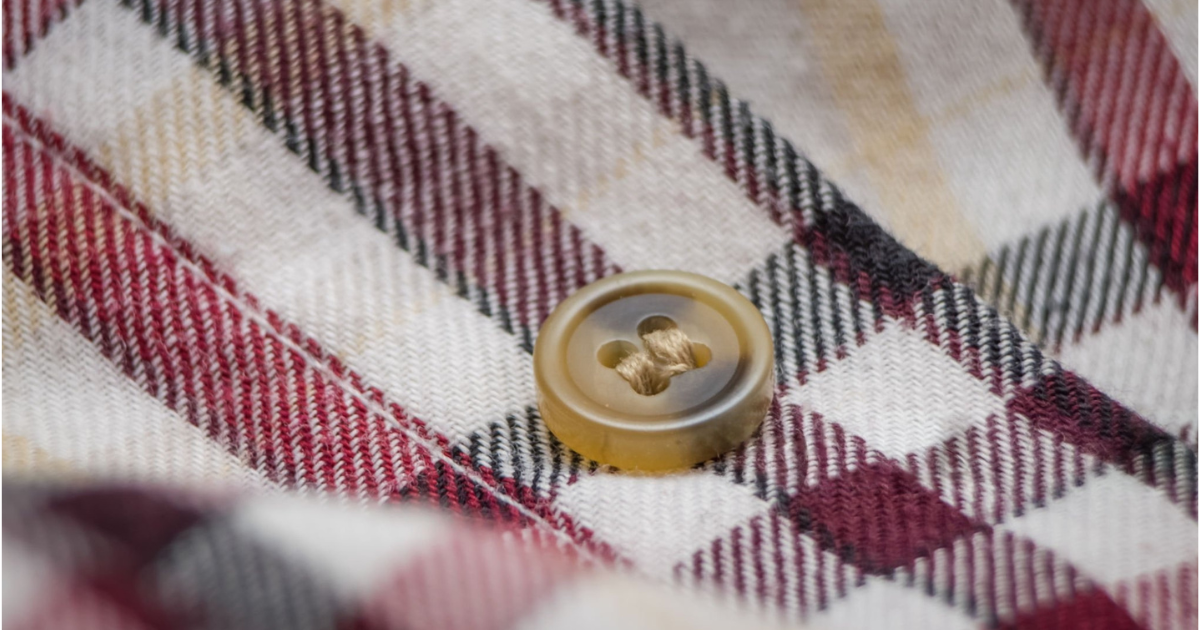
Careful pigment blending during casting creates color patterns that closely mimic buffalo horn's natural grain - dark streaks, warm amber tones, translucency. Costs less and ships faster than real horn. Color matching is exact and repeatable across any run size.
Fair disclosure: it won't match the translucency depth of real buffalo horn held to light. If that matters, we'd recommend genuine horn buttons.
Clear and semi-transparent buttons for when the button needs to disappear into the garment. Used in lingerie, lightweight blouses, and knitwear. We use a styrene-free, lead-free, cadmium-free formulation. Clarity holds through multiple wash cycles without yellowing.
Unsaturated polyester resin is combined with styrene monomer (solvent and cross-linking agent), cobalt accelerator, wax, and pigments. The pigment formula is where the craft lives - small ratio changes produce noticeably different results. We keep our exact recipes proprietary. Mixing happens under controlled conditions because temperature and humidity affect curing.
Two methods, depending on the button type:
Sheet casting: Resin is poured into rotating centrifugal drums. Centrifugal force distributes it evenly into flat sheets (2-4mm thick). After gelling, sheets are removed and cured until hard. Our equipment comes from Italian manufacturer Bonetti.
Rod casting: Resin is poured into cylindrical aluminum tubes through a W-shaped oscillating pipe, cures into solid rods, then gets sliced into discs. Preferred for imitation horn and structured designs because the cylindrical format creates more complex internal color patterns.
We run both casting methods at our factory.
Cured sheets go onto a punching machine with precision dies that stamp out circular blanks. Sizes use the ligne system (1 ligne = 0.635mm). Shirt buttons: 16L-18L. Coat buttons: 32L-40L.
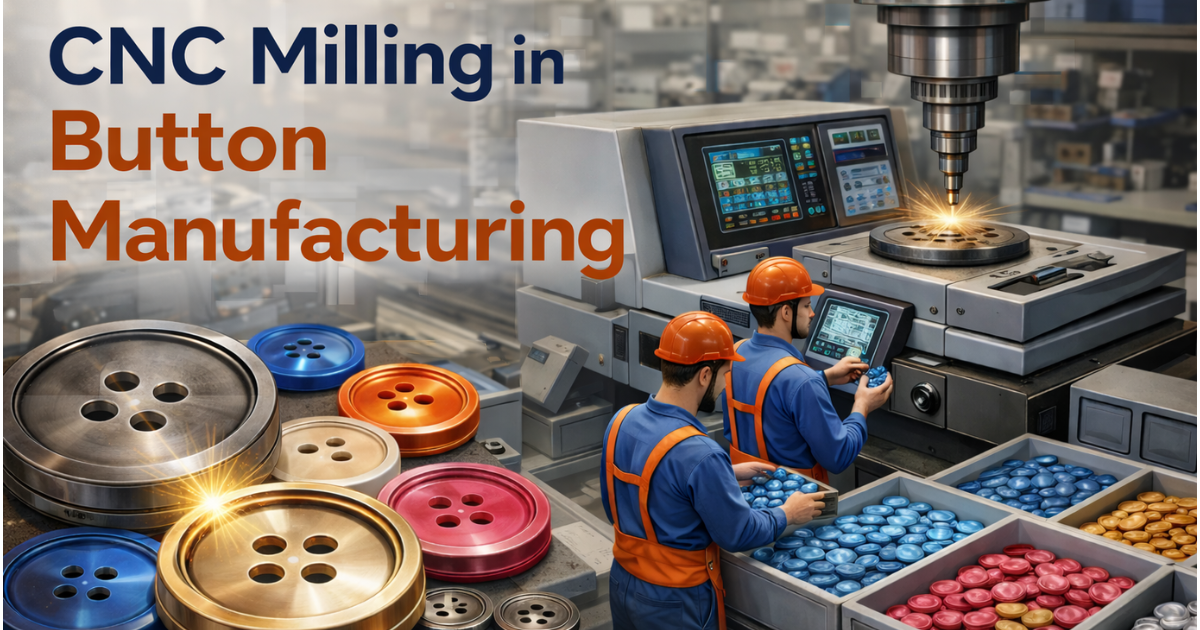
CNC turning machines shape rim depth, well shape, back contour, and hole placement. Rim thickness can be specified to within 0.1mm. Our CNC milling produces complex profiles that manual turning can't match.
Color penetrates into the material, not just the surface. We match any Pantone shade. Our dyeing process uses controlled temperature baths. Every batch is tested for colorfastness against OEKO-TEX Standard 100.
Polishing creates the final surface - high gloss, satin, or matte. Optional additions: laser engraving for logos, lacquer for UV protection, electroplating for metallic effects.
Quality control includes conveyor-belt visual inspection plus mechanical tests for pull strength, impact resistance, and colorfastness. Full production cycle: 5-7 days from raw resin to finished button.
We manufacture both across two factories, so we won't pretend one is always better.
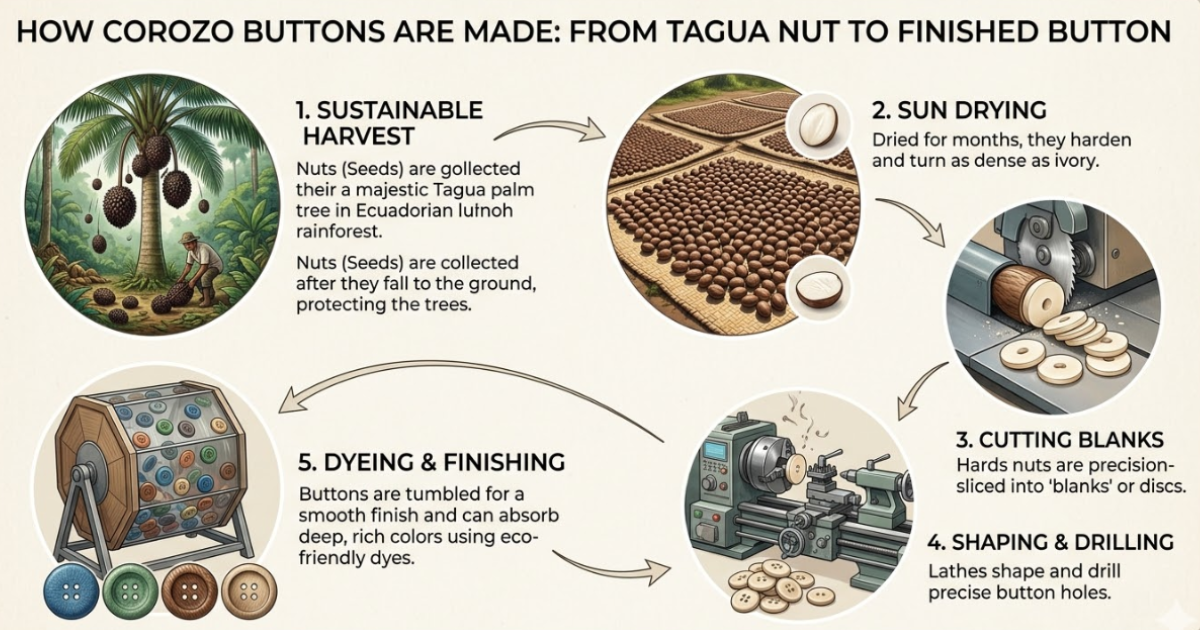
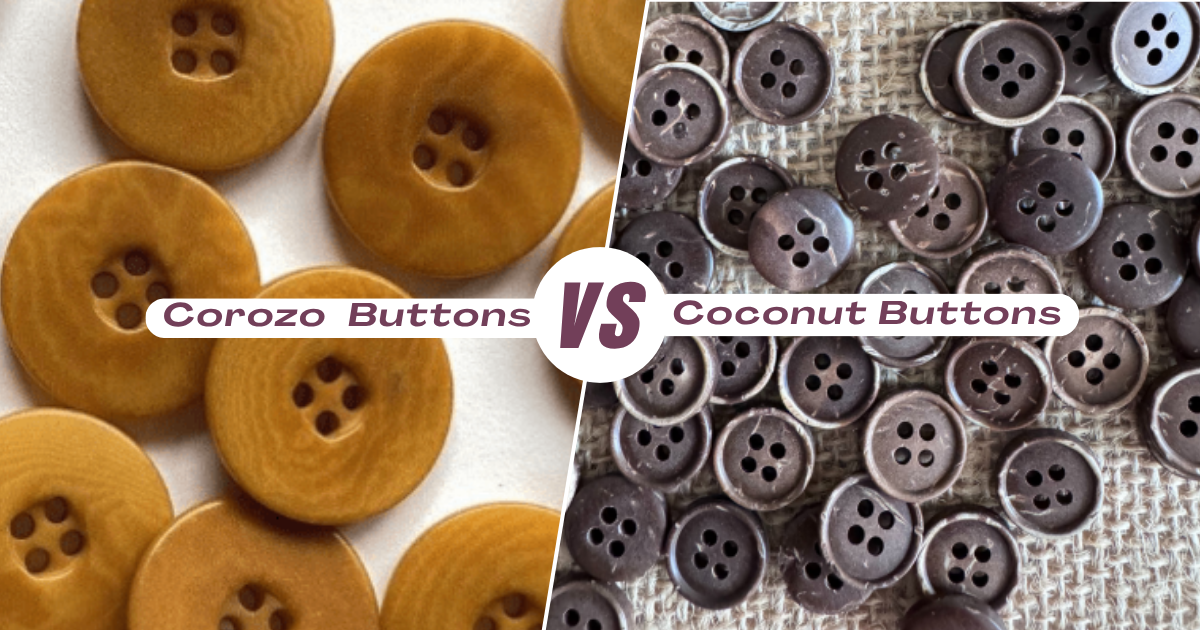
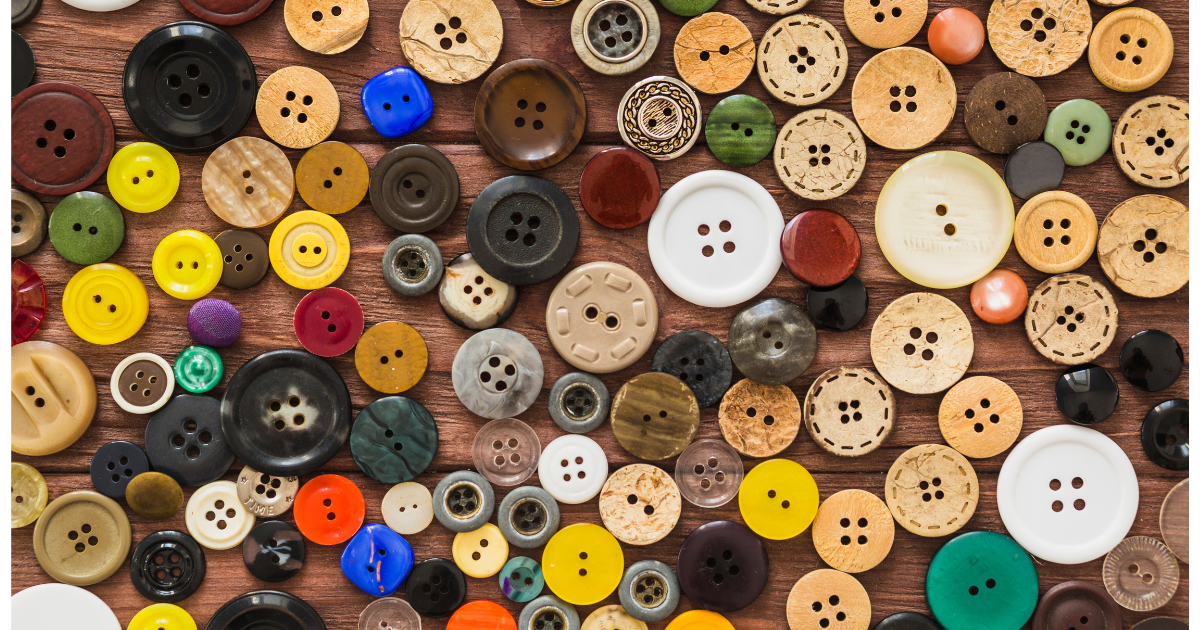
Commercial-volume shirting or uniforms? Polyester. Luxury or sustainable fashion where material story matters? Natural buttons like corozo or coconut shell carry more weight.
Standard polyester resin is petroleum-derived. Recycled polyester buttons use resin from post-consumer PET bottles or reclaimed industrial waste, reformulated to the same performance standards - same colorfastness, heat resistance, and dimensional stability.
At Chetna International, our recycled resin is styrene-free, lead-free, and cadmium-free. We provide transaction certificates for the claim chain on request.
Our subsidiary RRAJ Bioplast (launched 2021) goes further - converting non-recyclable button manufacturing waste into compounds blended with PP, HDPE, LDPE, and ABS. That material is our Reformé line.
Is it a perfect solution? No. The resin still originates from petroleum at some point. It won't biodegrade like corozo or wood. But it cuts virgin petroleum consumption and diverts plastic from landfills.
Standard or pearl polyester, 16L-18L (10-11.5mm). Flat, sew-through, 4-hole. Thickness: 2.5-3mm so it sits flush under a jacket.
Imitation horn or chalk polyester, 18L-24L. Slightly thicker profile (3-3.5mm) for more visual presence. Matte or satin finish.
Standard or chalk polyester, 20L-28L. 4-hole sew-through for maximum attachment strength against mechanical stress from belts and waistbands.
Must meet EN 71 (toy safety), CPSIA, and REACH. Small buttons need pull-strength testing to prevent choking hazards. We provide compliance documentation for all children's production.
Recycled polyester. Request the transaction certificate. Pair with OEKO-TEX-certified fabrics for a coherent sustainability message.
MOQ: Most button manufacturers start at 500-1,000 gross (72,000-144,000 buttons) for custom colors. Standard catalog colors have lower minimums. Always request physical samples - monitor color accuracy is unreliable.
Lead times: 2-4 weeks for standard runs. Custom development adds 1-2 weeks for tooling.
Certifications to request: OEKO-TEX Standard 100, ISO 9001, REACH compliance, CPSIA documentation, social compliance audit reports. We maintain compliance certifications and welcome audits.
Pricing factors: Size, profile complexity, finishing, Pantone matching (costs more than catalog colors), and volume. Don't evaluate purely on unit price - factor in defect rates and delivery consistency.
What's the difference between polyester resin buttons and plastic buttons?
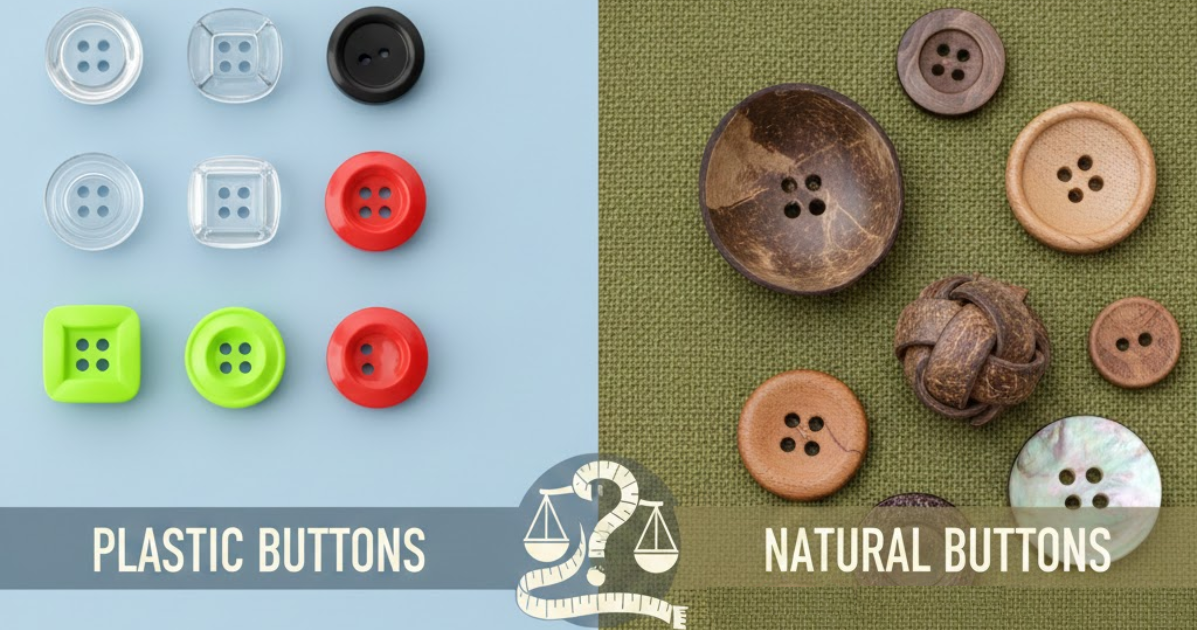
Polyester resin is thermoset - cures permanently, can't be re-melted. "Plastic buttons" typically means thermoplastics (ABS, nylon) made through injection molding. Polyester is cast, turned, and dyed for higher quality.
Can polyester buttons be recycled?
Thermoset resin can't be melted down like PET bottles, but manufacturing waste can be converted into composite materials. Our subsidiary RRAJ Bioplast turns production scrap into usable polymer compounds.
How do recycled polyester buttons compare to virgin?
Equivalent performance. Same colorfastness, wash durability, and dimensional stability. The difference is raw material source. Request a transaction certificate to verify claims.
Are polyester buttons safe for children's clothing?
Yes, with proper testing. Must meet EN 71, CPSIA, and REACH. Critical tests: pull strength and chemical safety. Always request compliance documentation.
What sizes are available?
10L (6.35mm) to 80L (50.8mm). Shirts: 16L-18L. Suit jackets: 24L-32L. Coats: 40L+. Custom sizes possible with tooling.
Do polyester buttons yellow over time?
Not with proper UV stabilizers. Yellowing indicates cheap formulations or heat exposure. We run accelerated aging tests on every batch.
What's the most durable finish?
Lacquer coating. Adds UV and scratch resistance beyond polishing alone. Best for workwear and uniforms facing years of industrial laundering.


.svg)


.svg)

.jpg)




.jpg)

%20(1).jpg)

.jpg)




.jpg)


.jpg)


.jpg)
.jpg)


.jpg)

.jpg)


