.webp)


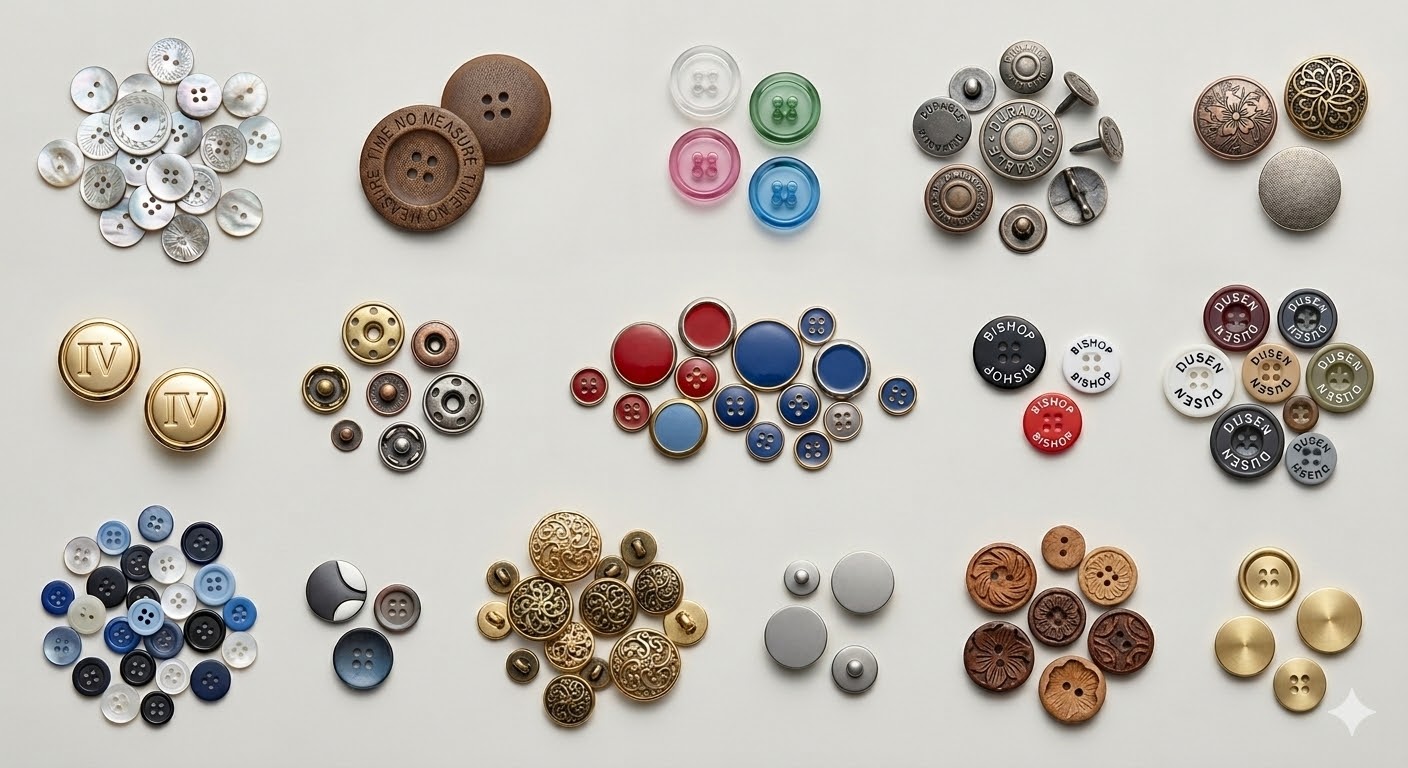
Buttons may seem like a small detail, but they play a critical role in garment design. The right button enhances functionality, durability, and overall aesthetics, while the wrong one can ruin the look or reduce the garment’s lifespan. In fashion and garment manufacturing, button selection is a strategic design decision rather than a simple accessory choice.
This comprehensive guide explains everything you need to know about selecting the perfect buttons for your garments, including types, materials, sizes, design considerations, and professional tips used in the fashion industry.
What Makes a Button the Right Button?
A button is right for a garment when it survives the garment's intended use, passes wash requirements, suits the price point, and looks correct for the aesthetic. Four criteria - and they don't always point to the same material.
Procurement teams focus on cost and lead time. Designers focus on look and feel. Quality managers focus on durability and compliance. A good button choice satisfies all three. The sections below walk through each factor in turn.
Button Materials: What They Are and When to Use Them
Material is the first decision and it shapes every other one. We manufacture across nine material families at Chetna International. The comparison table below covers the essentials; the material notes that follow give the detail worth knowing.
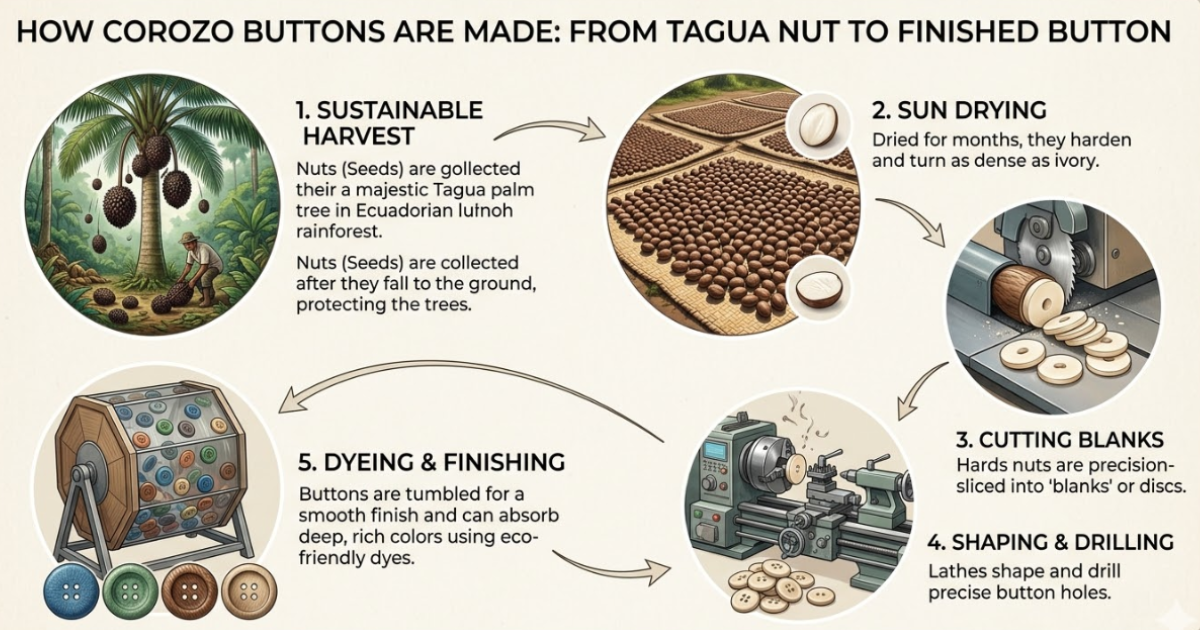
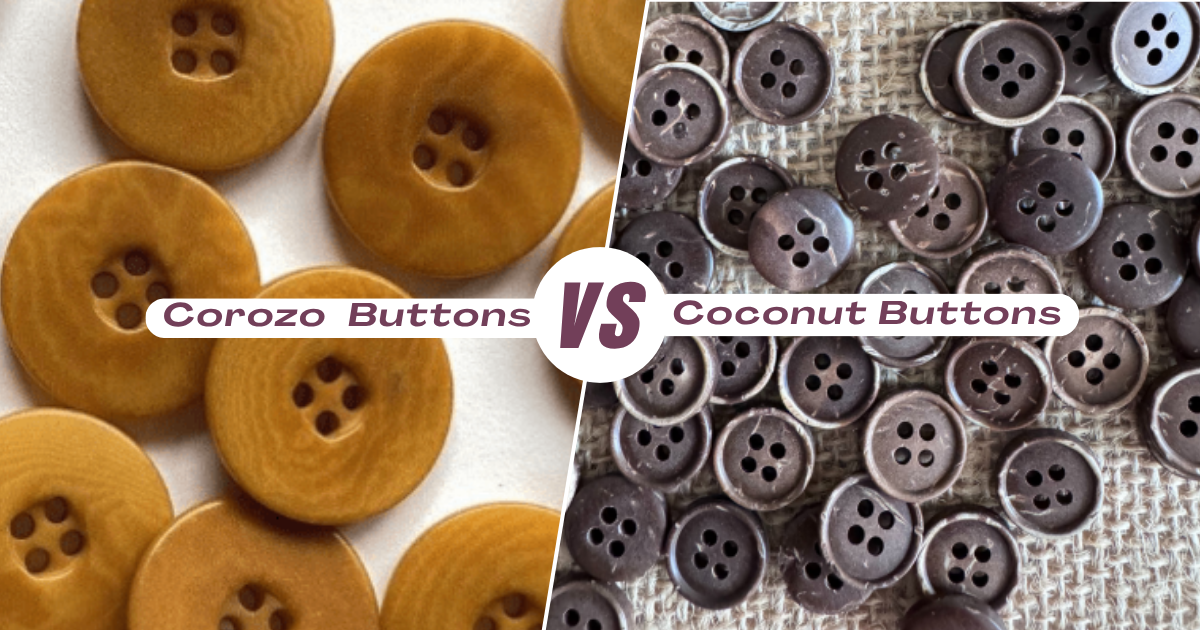
Corozo buttons (tagua nut, vegetable ivory, from the Phytelephas palm in South America) are our most requested natural material. They take dye well, hold tight tolerances during turning, and each button varies grain by grain in a way no synthetic can replicate. They're also biodegradable and sourced from a non-timber crop.
Hard limit to know: don't spec corozo for garments going through industrial washing above 40C. Colour shift is a real risk. For luxury shirting, casualwear, and sustainable collections it's the obvious choice.
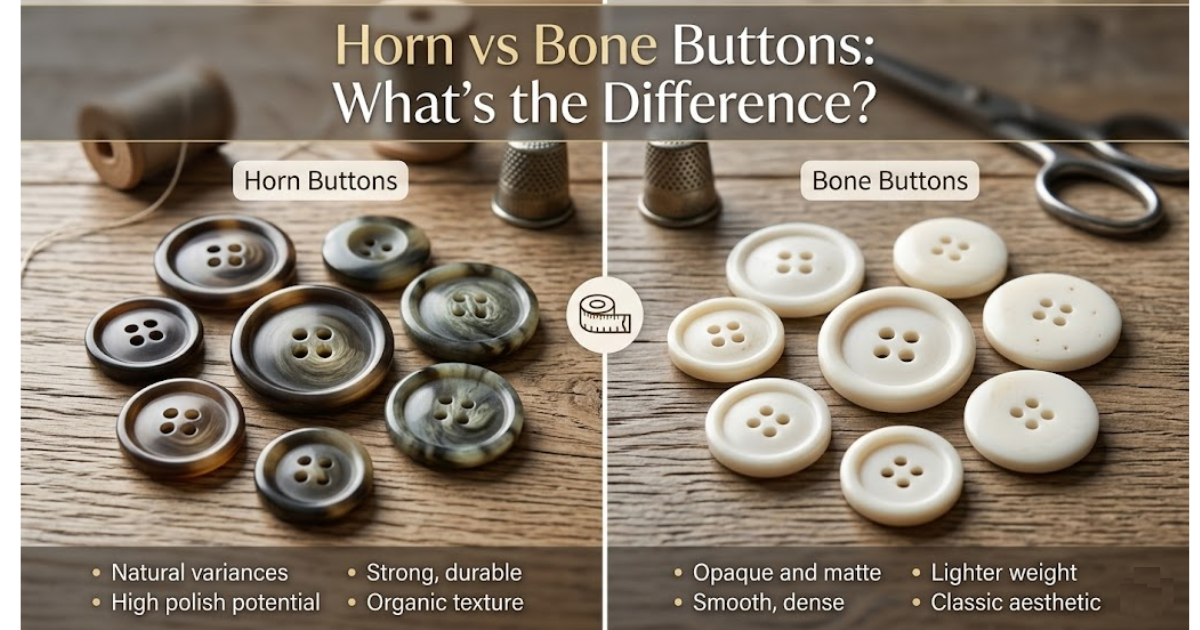
Real horn buttons - buffalo horn, not imitation - are the traditional choice for tailoring. Dense, slightly translucent in thin sections, developing a patina with wear. No two blanks are identical. Our horn arrives from India as a food industry byproduct, not harvested for buttons.
Bone buttons are underrated. Crisp, clean, slightly off-white in their natural state - which reads better than stark white polyester on most fabrics. Bone handles warm washing without issue and it's harder than it looks.
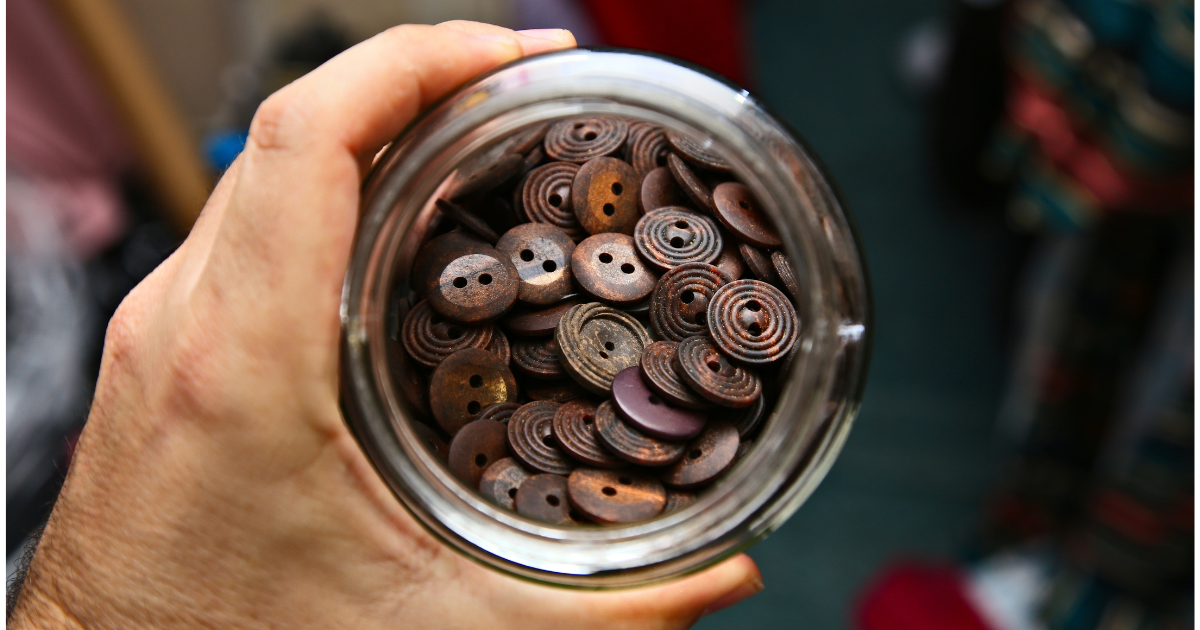
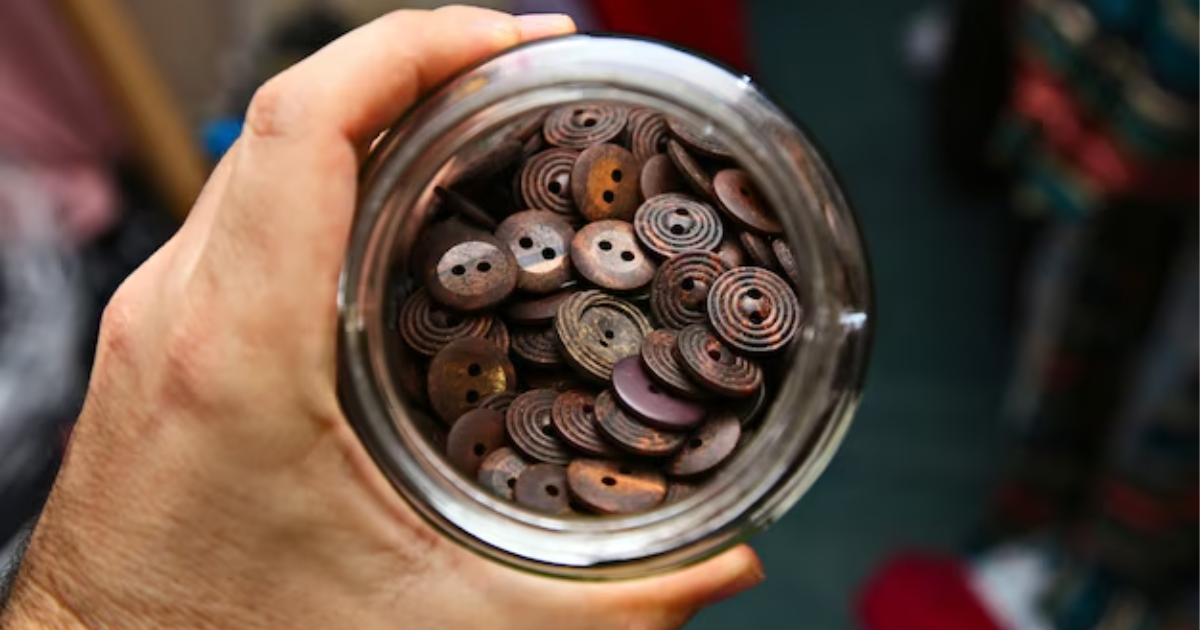
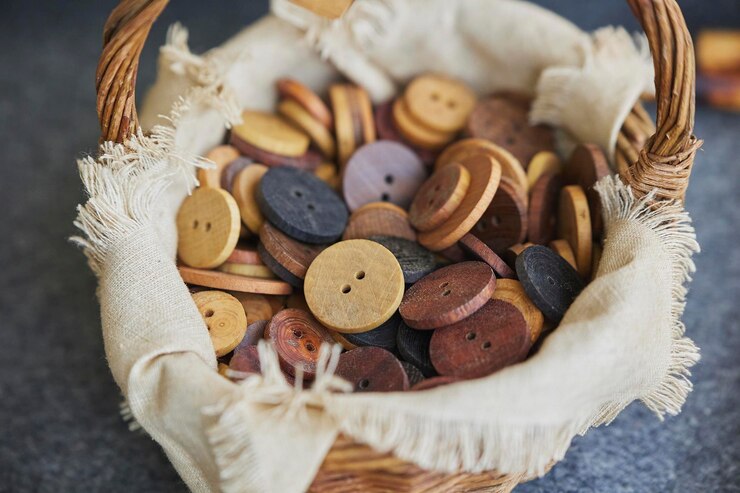
Coconut shell buttons have a speckled, warm brown finish that's genuinely difficult to replicate synthetically. Made from upcycled husk. The surface takes light finishes and laser engraving well, though dimensional consistency is lower than corozo or horn.
Wood and bamboo buttons are the natural material entry point on a budget. FSC-certified sourcing available. Fine for casual and children's wear, but avoid anywhere that sees regular high-heat washing.
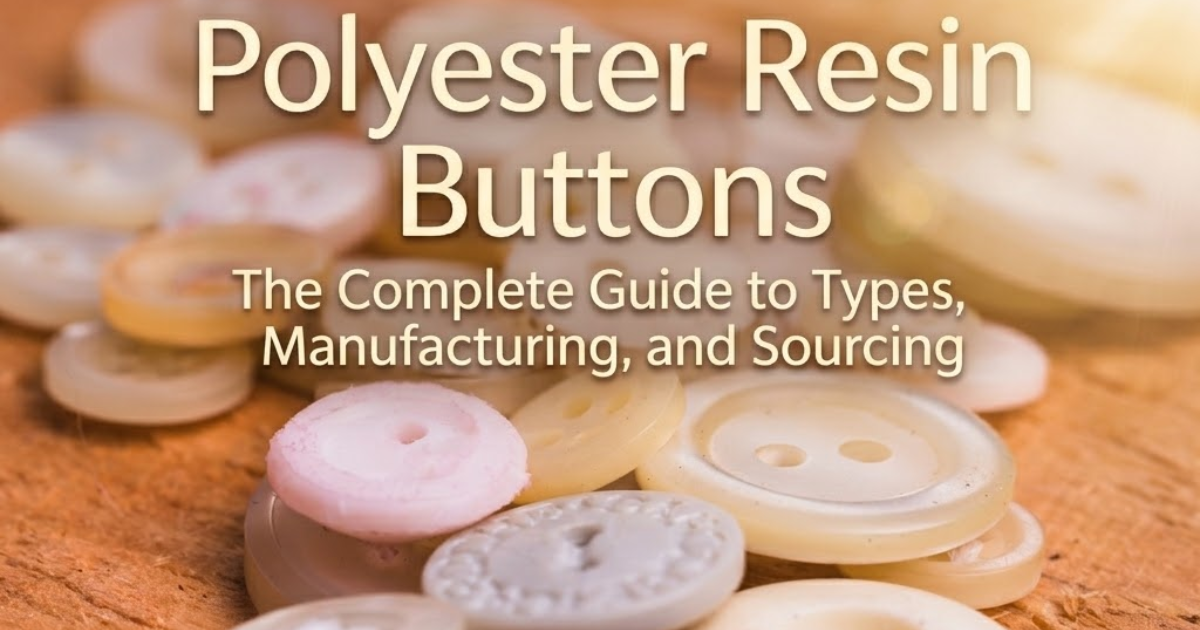
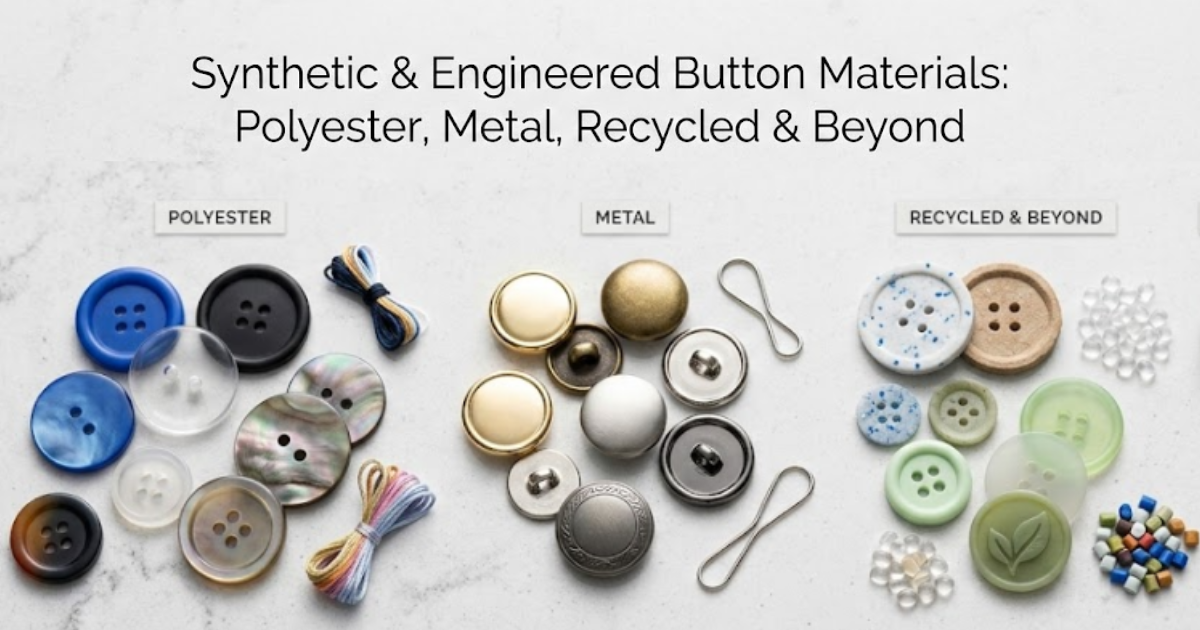
Polyester resin buttons are the industry workhorse. Cast in sheets, turned or stamped to shape, dimensionally consistent, colour-stable, and built to survive aggressive industrial washing. For uniforms, workwear, or any high-volume program where colour matching across batches matters, this is the practical call.
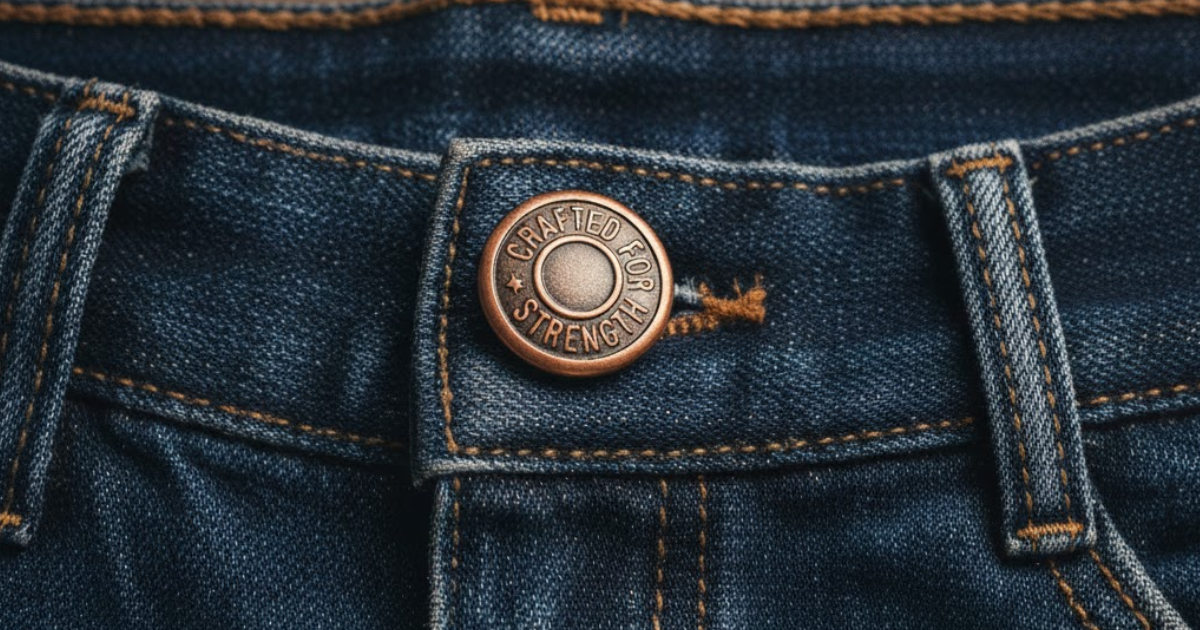
Metal buttons are structural as much as decorative. On denim waistbands, outerwear, and accessories they take mechanical stress that would split any natural material. We produce them through casting and electroplating, with finishes from matte gunmetal to bright gold.
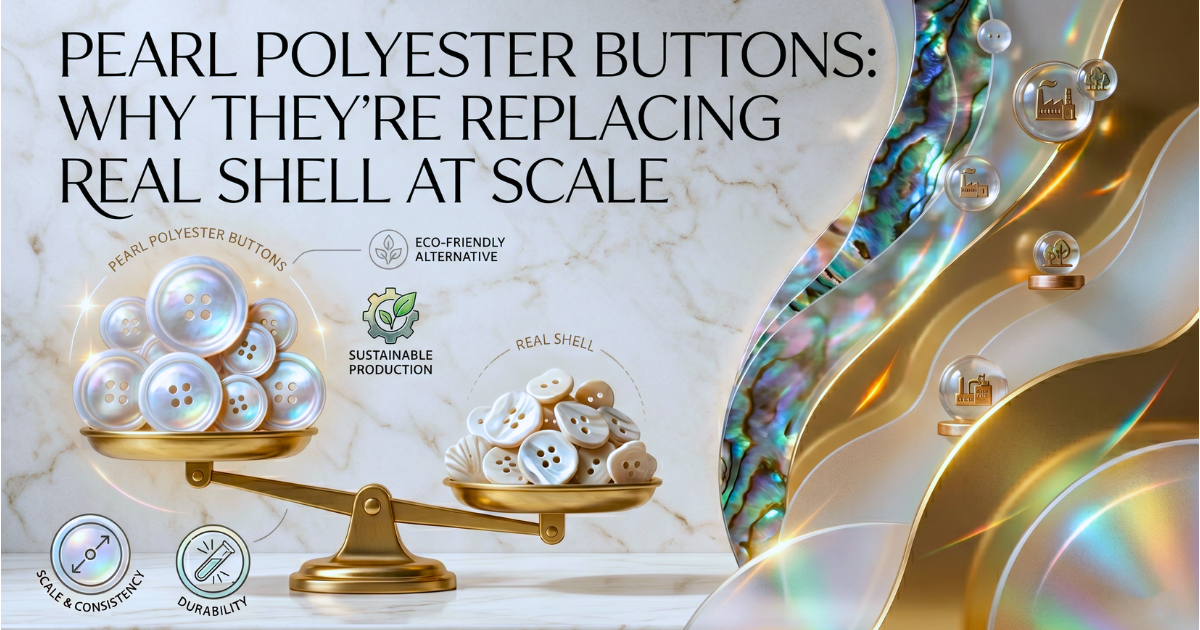
Chalk polyester and pearl polyester sit in the middle of the market - cleaner look than standard polyester at a lower price than natural materials. Solid choice for midmarket dress shirts and blouses.
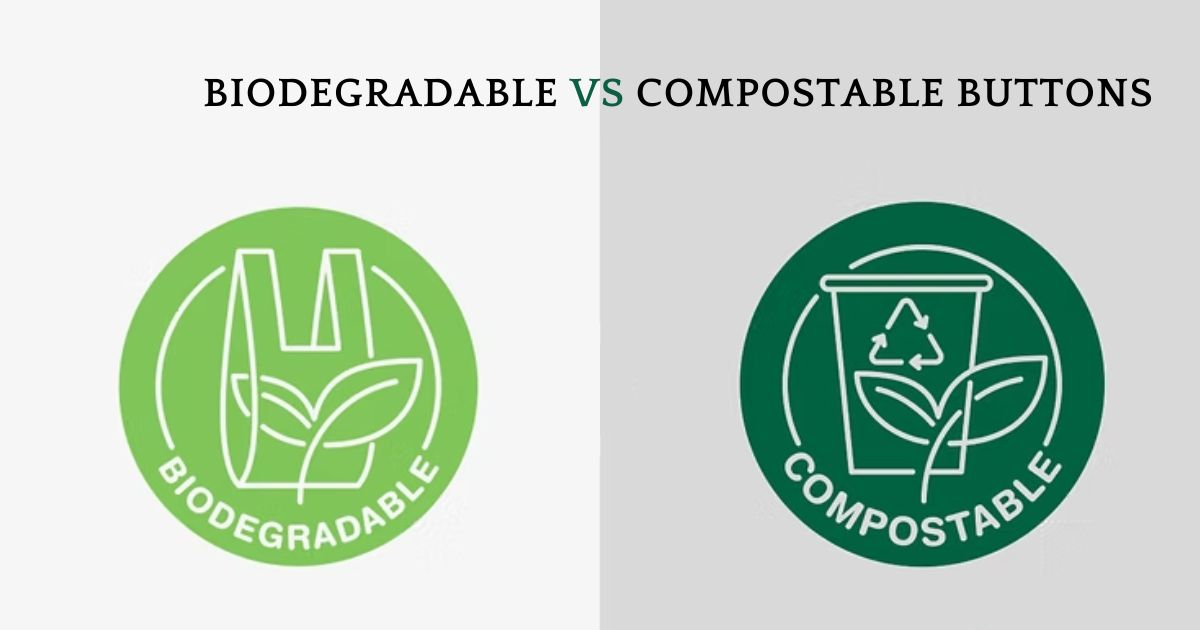
Sustainability clauses are standard in most major brand supplier agreements now. Two material options address this - and they work differently.
Biodegradable buttons: corozo, horn, bone, coconut shell, and wood all break down at end of garment life without leaving microplastic residue. For brands committed to circular fashion, these are the honest starting point.
Recycled buttons: our Reformé range uses reprocessed button manufacturing waste, handled by our subsidiary RRAJ Bioplast. Durability comparable to polyester, REACH compliant, available across a wide colour range.
One honest note on both: neither biodegradable nor recycled buttons mean sustainable if the supply chain around them isn't managed. Our sustainability page covers how we approach this in practice.
Button Sizes: Getting the Measurements Right
Button sizes are measured in ligne (L). One ligne equals 0.635mm - so a 20L button is 12.7mm in diameter. If your tech pack uses millimetres, convert before you order, or ask your supplier to confirm in both units. Mismatches cause collar stand drag, buttonhole gape, and returns.
These are guidelines, not rules - designers spec outside these ranges regularly. But if your pattern maker is on a standard block, start here. For hole diameter tolerances and shank height specs, check with your supplier or ask our team directly.
Button Attachment: Sew-Through vs Shank
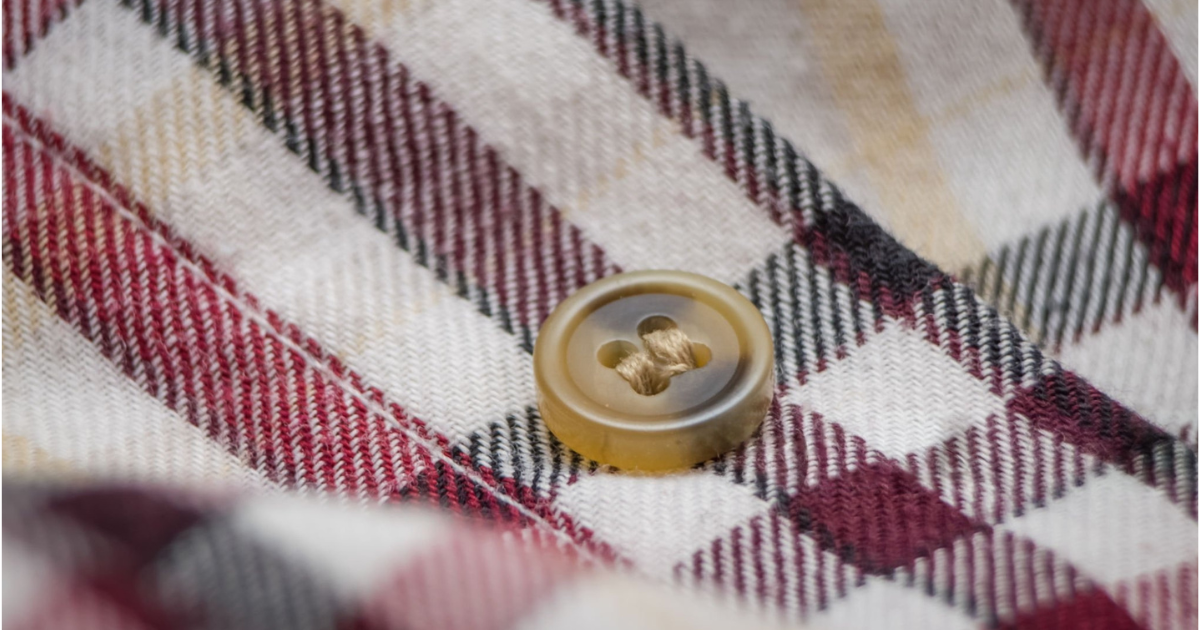
Sew-through buttons have holes drilled through the face - two or four holes - and attach directly to the fabric. Shank buttons have a loop or stem on the underside; the button floats above the fabric surface, with thread running through the shank only.
Sew-through is faster to attach and easier to replace in alterations. Shanks work better on thick fabrics - wool coats, padded jackets - because they let the buttonhole side close cleanly without the button face dragging against a bulky surface.
On knitwear, shanks prevent the button from pulling at the stitches. Sew-through buttons sewn too tightly will deform a jersey panel over time. On denim, tack buttons (a shank variant with a post punched through the fabric) are structural rather than decorative.
Four-hole sew-through buttons are more secure than two-hole, and their cross-stitch pattern is a visible design detail on dress shirts worth speccing deliberately.
[Insert image: close-up of sew-through vs shank button underside comparison]
Wash and Wear Tolerances: What Survives and What Doesn't
A button that fades, warps, or shatters in the wash comes back as a complaint - and returned goods cost more than the original button saving. Get this wrong, and no amount of right decisions elsewhere covers you.
Natural materials need more care. Corozo handles warm washing (30-40C) but shouldn't go through industrial laundry programs above 60 °C. Horn is best dry-cleaned for finished garments; occasional machine washing at low temperatures is fine, but extended heat and detergent will dull the surface.
Polyester resin handles hot washing, industrial tumble drying, and bleach exposure without dimensional change or colour shift. For healthcare or hospitality uniform programs with aggressive laundry protocols, polyester is the rational choice.
Metal buttons need individual attention. Plated finishes - gold, silver, gunmetal - degrade in chlorine bleach. Solid brass or stainless steel can handle more, but plated finishes need care labels that reflect this.
Sample-wash before committing to a production run. Send us your spec and we'll advise which materials suit your care label. Wash fastness testing is part of our standard quality control process.
Custom Buttons: When Standard Options Aren't Enough
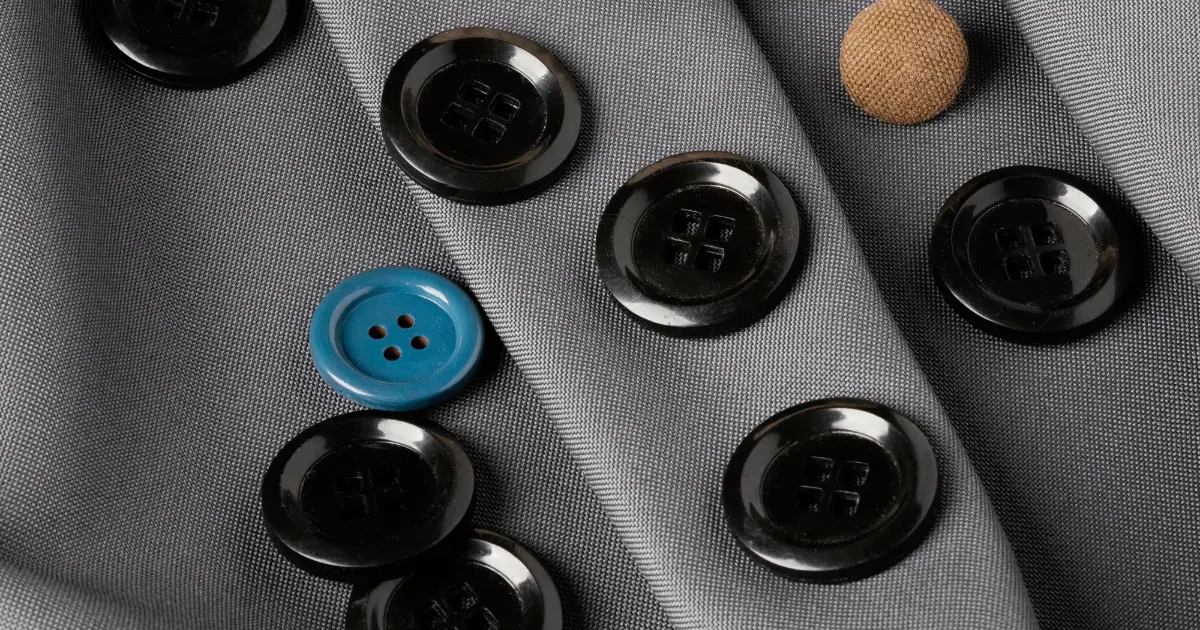
Custom buttons - made to your design, in your exact colour, with your logo laser-engraved or cast in relief - create brand touchpoints that standard trim doesn't. We develop them at various scales, from small designer runs to volume programs.
The development process runs four phases: brief and specification, material selection and prototyping, sample approval, production. Brief to approved sample is typically four to six weeks for a new design in a standard material.
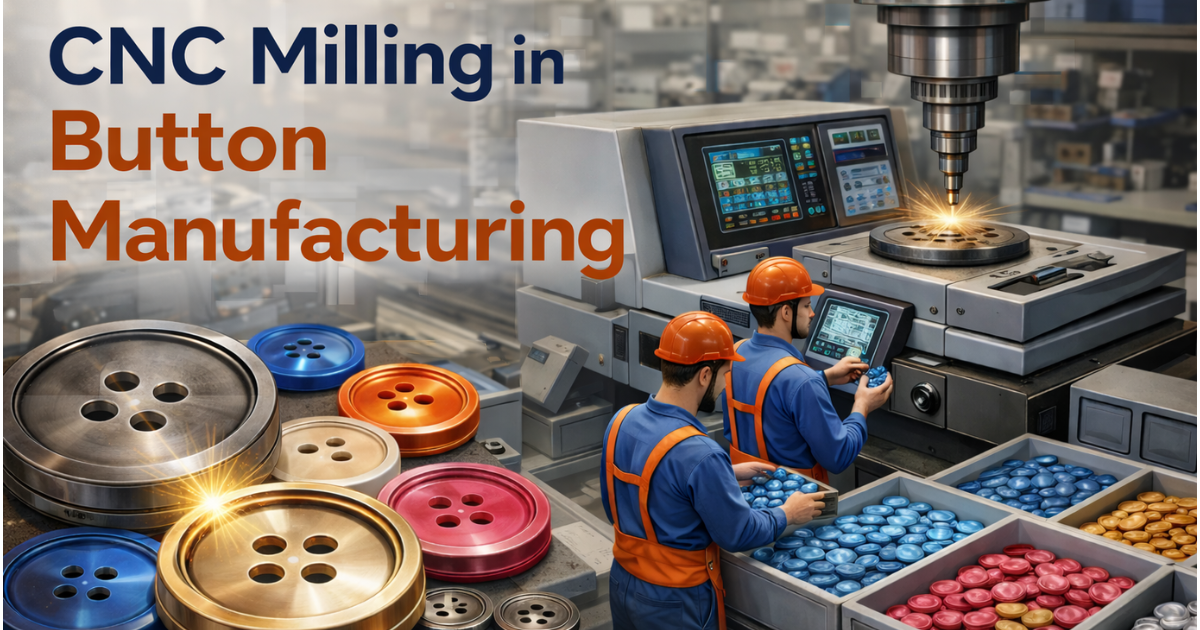
Custom development covers colour matching (Pantone or fabric swatch references in polyester resin and corozo dye), shape (non-standard outlines via CNC milling), surface treatment (laser engraving and electroplating), and construction details like shank options and hole configurations. Our customised solutions page covers the full scope of what's possible.
MOQs depend on die complexity and process. Simple colour custom-runs in standard shapes start at 500 pieces. Complex shapes or multi-process finishes run higher. Contact us with your brief for an accurate figure.
[Insert image: side-by-side of custom branded buttons showing laser engraving and embossing detail]
How to Choose a Buttons Manufacturer: What to Ask Before You Commit
Ask whether they manufacture in-house. Traders sourcing from multiple factories can't give you certainty on tolerances, lead times, or process variations. A real manufacturer can. At Chetna International, two specialist factories - one natural materials, one polyester - and every process under one roof.
On QC, push for specifics: what percentage is inspected, what equipment they use, what happens to rejected stock. Our process runs colour spectrophotometry, dimensional checks, and wash testing as standard.
Confirm capacity matches your run size and ask for OEKO-TEX and REACH documentation upfront if your buyers require it. Our compliance certifications are available on request.
Watch for these:
Sourcing Checklist Before You Place an Order
Run through this before committing to any button production run.
Frequently Asked Questions
What's the difference between natural and synthetic buttons?
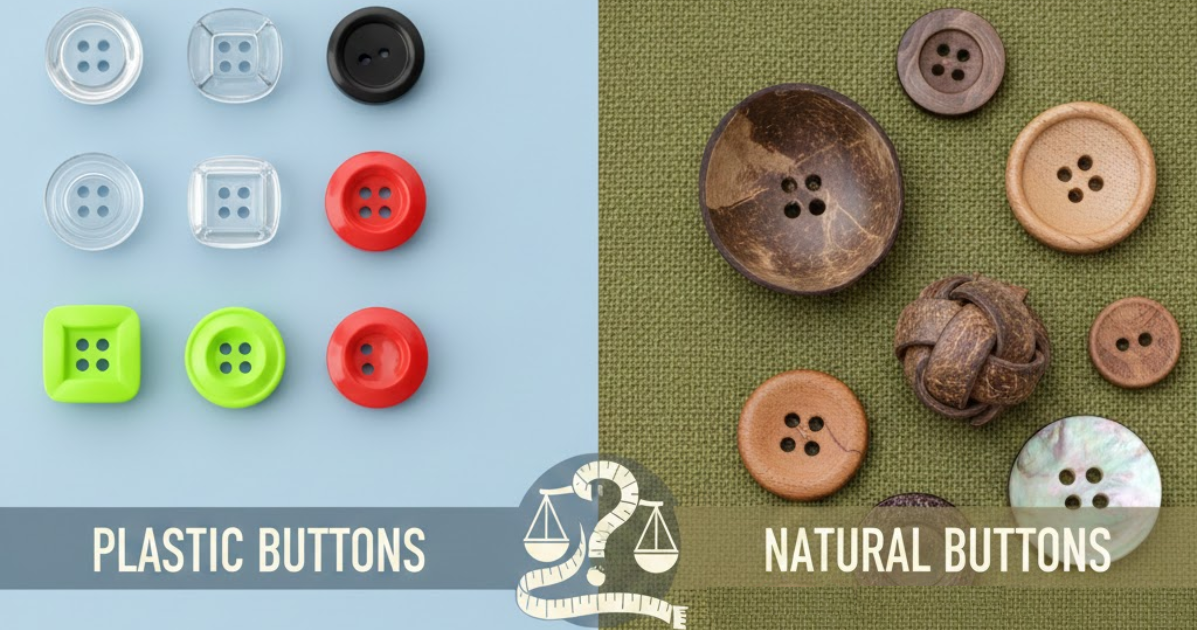
Natural buttons (corozo, horn, bone, coconut, wood) come from plant or animal sources and vary slightly grain by grain. Synthetic buttons (polyester, metal) are manufactured to consistent specs. Naturals suit premium and sustainable applications; synthetics suit volume and wash-intensive programs.
What are biodegradable buttons made from?
Corozo, horn, bone, coconut shell, and wood are all naturally biodegradable. Corozo is the most popular choice for sustainable collections - it comes from a renewable plant source and takes dye better than most other natural materials.
What are recycled buttons made from?
Our Reformé range uses reprocessed button manufacturing waste - offcuts and rejected material - converted into usable compounds by RRAJ Bioplast, our subsidiary. The output has polyester durability and carries a verified recycled content claim.
What's the minimum order quantity for custom buttons?
Standard shapes with a colour adjustment typically start at 500 pieces. Custom shapes or multi-process finishes (laser engraving plus electroplating, for example) run higher. Contact us with your brief for an accurate figure.
How do I convert ligne to millimetres?
Multiply the ligne figure by 0.635. A 20L button is 12.7mm; a 36L button is 22.9mm. Some manufacturers measure hole-to-edge rather than overall diameter, so always confirm with your supplier.
Can I use natural buttons on machine-washable garments?
Bone and corozo handle 30-40 °C gentle cycles well. Horn needs dry cleaning or hand washing. Wood should avoid prolonged soaking. Test-wash a sample before setting your care label - don't rely on general guidance alone.
How long does sample development take?
A colour adjustment on an existing shape: two to three weeks. A new custom shape requiring tooling: four to six weeks. Multi-process custom buttons: eight to ten weeks from brief to approved sample.
Are your buttons OEKO-TEX certified?
Our synthetic range is produced to OEKO-TEX Standard 100 compliance. For current certification status by material, contact us directly.


.svg)


.svg)

.jpg)




.jpg)

%20(1).jpg)

.jpg)




.jpg)


.jpg)


.jpg)
.jpg)


.jpg)

.jpg)


